The Secret Behind The 5,000-Year History of Tandoor Cooking!
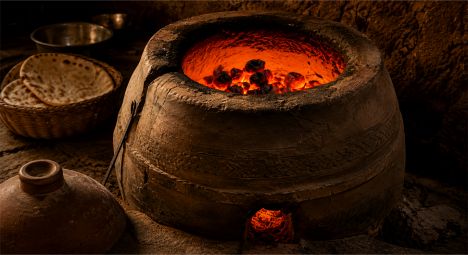
The Ancient Tradition That Has Never Gone Out of Fashion!
The tandoor is arguably the oldest cooking technology still in active daily use.
Archaeologists have found clay ovens in sites across the Indian subcontinent dating back thousands of years some of the earliest evidence pushes past 5,000 BCE. The basic design has remained largely unchanged since then: a cylindrical clay vessel, sealed at the bottom, reaching temperatures that a conventional oven cannot approach. The food cooks in three ways simultaneously: radiant heat from the walls, convection from the rising hot air, and direct contact where it touches the clay.
The result is something no modern oven replicates. The outside chars quickly while the inside stays tender. Bread bakes in under two minutes, developing a blistered crust and a smoky flavour that you recognise immediately. Meat on a skewer loses its fat to the fire and returns as something entirely different.
Why It Survived
Plenty of ancient cooking technologies did not make it. The tandoor did, and not because people were sentimental about it. It survived because it produces results that other methods cannot match.
There is a useful lesson in that. When a technique persists across five millennia, through the rise and fall of empires, through industrialisation and the invention of gas cookers and electric ovens, it is worth paying attention to why.
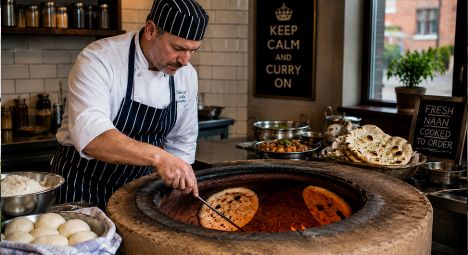
The Knowledge Behind the Technique
Operating a tandoor is not complicated, but it is specific. The temperature management is different from anything else in the kitchen. The timing is different. The way you handle the bread dough, the angle of the stick, the slap against the clay wall, and the speed of retrieval are learned through repetition, not from a manual.
This is the kind of knowledge that passes between people, not through instruction but through watching and doing. It is part of why the tradition has stayed alive: it requires human transmission.
What It Means at Rao's
We use the tandoor because the food it produces is better. That is the beginning and end of the argument.
But there is something else too. When a guest at Rao's eats bread that came out of a tandoor, they are eating food prepared in a way that humans have found worth preserving for five thousand years. That connection to history is not the reason to order it; the flavour is the reason, but it does add something to the experience.
East London is full of people who moved from somewhere else and brought their food with them. The tandoor has been doing that for millennia.